BOX ELDER — The South Dakota Air & Space Museum held its second annual STEM Day, highlighting how clubs, organizations and hands-on programs are helping students engage with science outside the classroom.
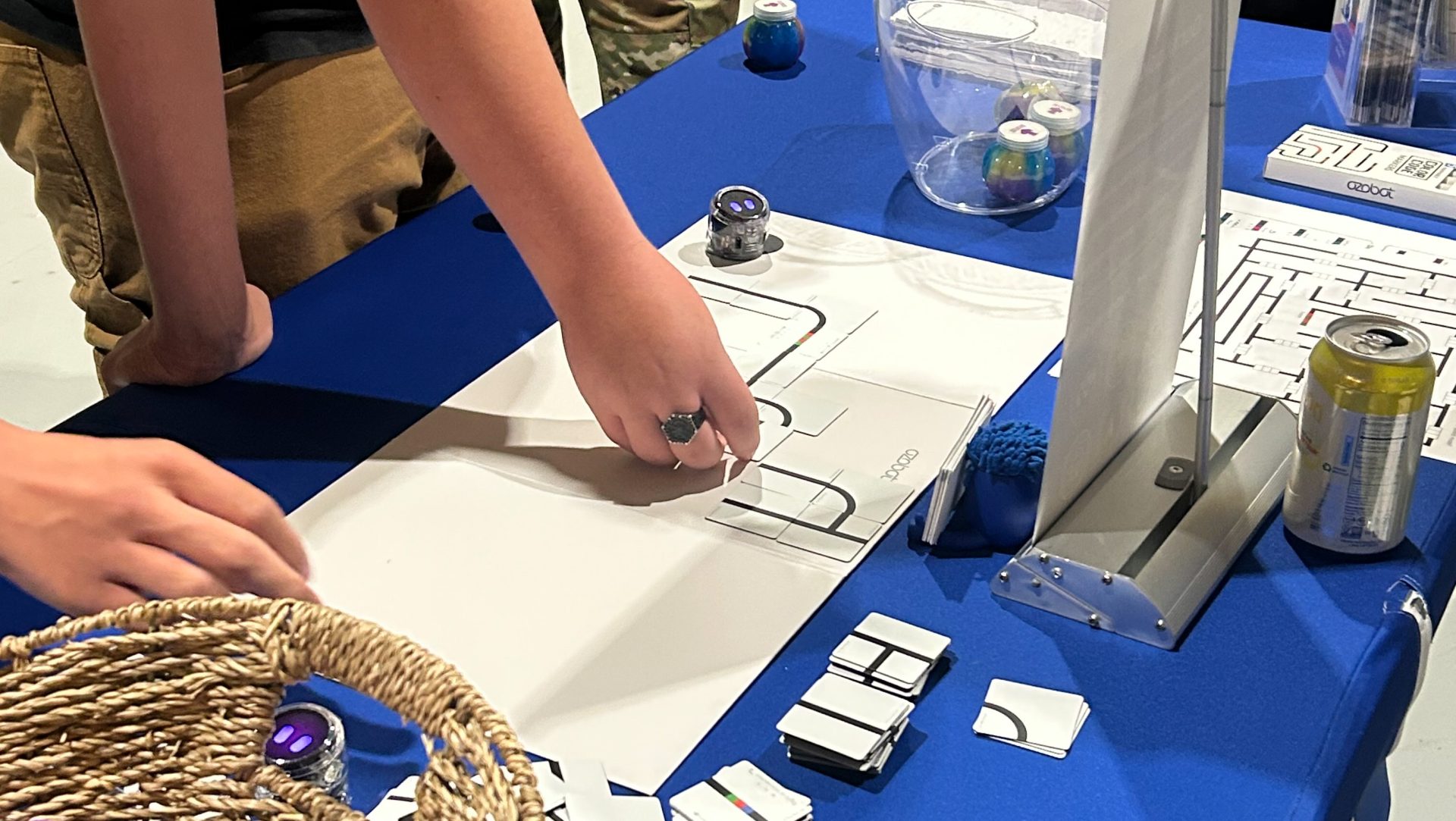
Booths featured science experiments, robotics, history, math and technology. The hands-on activities allowed students to experiment, ask questions and problem-solve.
Those experiences are what Box Elder resident Shannon Rios said her daughter Alison enjoys most. Rios’ son, Jose, loves robotics and was able to “drive” a robot at the event. Rios said the museum, along with the STEM event, is a great way for her kids to have fun, learn and stay off screens.
The event also gave the community an opportunity to see the range of businesses, organizations, clubs and educational programs connected to STEM education. Kelly Dore of Box Elder said the museum is a family favorite and she enjoys showing her children the various groups that participate in interactive learning days.
South Dakota School of Mines & Technology student Kate Bassett set up a booth to share her summer research project, which is creating Band-Aids for space. Bassett, a junior biomedical engineering major, is conducting the research through a grant her professor received from NASA.
Bassett said many things change in space, including food consumption, plant growth and living conditions, but injuries are often overlooked.
Bassett said wounds take longer to heal in space, leaving opportunity for infection.
“We do something called electric spinning, where we make a solution and we use a high voltage battery in order to collect tiny microfibers. We collect them and make a matte which could act like a Band-Aid in space,” she said. “We can culture cells to promote cell growth and replacement, so it heals faster.”
“I’ve had a bunch of kids come by and they’re like, ‘Oh, this is cool. I never even thought of that before.’ It’s fun,” Basset added.
And because every kid loves dinosaurs, John Wente and Bethany Cook of the Black Hills Institute of Geological Research showcased prehistoric exhibits and shared fossil replicas and dinosaur knowledge with attendees. The booth helped students understand paleontology and the work being done in their own communities.
“They get excited about dinosaurs. They get excited about science, and that’s our job is to promote that,” said Cook. “It starts out with a lot of imagination and then science comes in and then it just goes from there.”
“You learn a lot with the geology and ecosystem,” he said. That includes learning about how dinosaurs lived, what they ate and how they survived.
Wente said the kids were especially drawn to the dinosaur eggs and the T. rex replicas. Students were able to touch replicas and compare dinosaur replica fossils to bones of common animals such as deer and mountain lions for comparison.
Marc Schlecht of the Civil Air Patrol talked to students and community members about involvement in the Air Force civilian auxiliary group. The aerospace education program and cadet program teach participants about cybersecurity, aerospace, drones and other technology.
“It’s life skills,” Schlecht said. “We help cadets learn about leadership and aerospace and the world of STEM.”
Throughout the cadet program, participants are eligible to earn pilot certification as well as drone certification, he said.
STEM Day also featured members of the Rapid Accelerators, a high school robotics team, showcasing their robotic work. Members Tyler Mueller, Lincoln Tupper and Cole Seidl, all of Rapid City, shared the process of building a robot from concept to competition.
Within about six weeks, the team designs, builds, programs and tests robots for competition games. One of the robots featured at STEM Day qualified for the world championship, where the team placed in the top seven percent worldwide.
Participants could “drive” the robot and launch foam discs across the room, as well as learn more about how the robots were built. Watch a video demonstration of the robot launch here: Rapid Accelerators Robot
Each of the Rapid Accelerator students joined the program to deepen their STEM education while also participating in something they enjoy.
Mueller joined his sophomore year and will continue in the STEM field while attending college at the United States Air Force Academy studying engineering and robotics.
Tupper had always been interested in computer science and programming. After seeing a flyer for the Rapid Accelerators, he gave the group a try and has stayed with it since.
Seidl’s passion for design began in elementary school where he participated in First Lego League Explorers. He continued in similar programs through middle school before joining the Rapid Accelerators.
Jeanie Kirkpatrick, curator of the South Dakota Air & Space Museum, said she was pleased with the turnout and enjoys seeing the community engage with local and regional STEM organizations.
“You never know where you might find STEM,” Kirkpatrick said.